

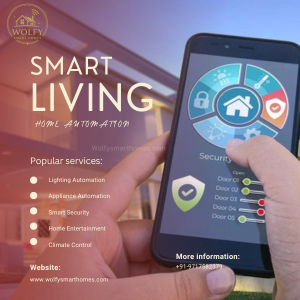
The world is moving rapidly towards smart living, and India is no exception. With increasing urbanization, a tech-savvy population, and affordable IoT devices, IoT-based Smart Home Automation is becoming an integral part of modern Indian homes. This innovative wave, powered by Internet of Things technology, is turning traditional houses into connected smart environments that enhance comfort, safety, and energy efficiency.
Table of Contents
- Introduction to Smart Home Automation in India
- The Role of IoT in Smart Living
- Key Benefits of IoT-Based Smart Home Automation
- Popular Smart Home Devices in India
- IoT Architecture Behind Smart Homes
- Challenges in Indian Smart Home Adoption
- Future Trends of IoT Smart Homes in India
- Final Thoughts
1. Introduction to Smart Home Automation in India
Home Automation in India is not just a luxury anymore; it’s becoming a necessity for the modern generation. With improved internet connectivity and falling prices of smart home devices, the adoption rate is surging across metropolitan cities like Delhi, Mumbai, and Bengaluru.
The growth of IoT-based Smart Home Automation has been driven by rising energy costs and the demand for convenience. This system enables homeowners to control lighting, appliances, security cameras, and climate systems through smartphones and voice assistants.
2. The Role of IoT in Smart Living
At the core of Smart Home Automation in India lies the Internet of Things technology. IoT connects various devices through a central network that allows them to interact intelligently.
For example, when a user leaves home, IoT systems can automatically turn off lights, switch off the air conditioning, and activate security modes. This seamless interconnectivity symbolizes the shift towards smart living, optimizing energy usage and user comfort.
| IoT Function | Description | Example |
|---|---|---|
| Device Control | Remotely control lights, AC, etc. | Using mobile apps |
| Energy Management | Monitor and reduce energy use | Smart plugs and sensors |
| Security Integration | Enhance safety with IoT cameras | Motion sensors & door locks |
| Entertainment Control | Manage TVs and audio systems | Smart speakers |
| Appliance Scheduling | Time-based device automation | Turn on the geyser at 6 AM |
3. Key Benefits of IoT-Based Smart Home Automation
Implementing IoT-based Smart Home Automation in Indian homes offers a host of advantages:
- Energy Efficiency: IoT devices monitor power consumption and optimize usage, reducing electricity bills.
- Enhanced Security: Smart sensors, door locks, and CCTV systems ensure 24/7 monitoring.
- Convenience: Control everything through voice commands or mobile apps.
- Remote Access: Manage your home automation in India from anywhere.
- Personalization: Internet of Things technology learns user preferences and automates tasks accordingly.
These features make smart living not just futuristic but highly practical for middle-class families in India.
4. Popular Smart Home Devices in India
As IoT-based homes grow in popularity, several categories of smart home devices are dominating the Indian market:
| Device Type | Purpose | Example Product |
|---|---|---|
| Smart Lights | Automated lighting control | Philips Hue, Wipro Smart Lights |
| Smart Switches | Centralized switch automation | Wolfy Smart Switch, Sonoff |
| Smart Plugs | Energy tracking & appliance control | TP-Link Kasa Smart Plug |
| Smart Curtains | Automated curtain movement | Alexa-compatible curtain motor |
| Smart Cameras | Real-time surveillance | Xiaomi Home Security Camera |
Each smart home device plays a key role in enhancing IoT-based Smart Home Automation, ensuring that every component works in sync using Internet of Things technology.
5. IoT Architecture Behind Smart Homes
The architecture of IoT-based Smart Home Automation comprises:
- Sensors: Detect environmental changes like motion, temperature, and light.
- Controllers: Process information from sensors and send commands.
- Gateways: Connect devices to the cloud using Wi-Fi or Zigbee.
- Cloud Servers: Store and process data for analytics.
- User Interface: Apps and dashboards for user control.
This seamless network ensures efficient smart living by making homes more responsive and intelligent.
6. Challenges in Indian Smart Home Adoption
While home automation in India is expanding rapidly, some challenges remain:
- Cost Factor: Advanced IoT-based systems can still be expensive for middle-income households.
- Connectivity Issues: Reliable internet is crucial for the Internet of Things technology to function properly.
- Awareness & Education: Many homeowners are still unaware of the benefits of smart home systems.
- Interoperability: Different brands using various protocols can cause integration issues.
However, the growing market competition and government initiatives for “Digital India” are expected to overcome these obstacles soon.
7. Future Trends of IoT Smart Homes in India
The future of IoT-based Smart Home Automation in India looks incredibly promising. With the rise of smart cities, 5G connectivity, and affordable smart home devices, more homeowners are likely to adopt Internet of Things technology.
Emerging trends include AI-based predictive automation, energy optimization through machine learning, and voice-controlled ecosystems integrated with local languages — a leap forward for smart living in India’s urban and semi-urban areas.
| Trend | Description | Indian Application |
|---|---|---|
| Voice Control | Use Alexa & Google Assistant | Smart home hubs |
| Energy Analytics | AI-driven energy predictions | Reduce bills |
| Localized IoT | Tailored to Indian conditions | Solar, load sensors |
| Multi-Platform Control | One app for all devices | Unified IoT control |
| Smart Communities | Interconnected homes | Apartment-level automation |
8. Final Thoughts
IoT-based Smart Home Automation is redefining home automation in India by merging Internet of Things technology with everyday living. As innovation continues and costs drop, India is poised to become one of the largest markets for smart home devices and smart living ecosystems.
For Indian households, the journey toward convenient and sustainable living begins with IoT — a revolution that’s just getting started.